
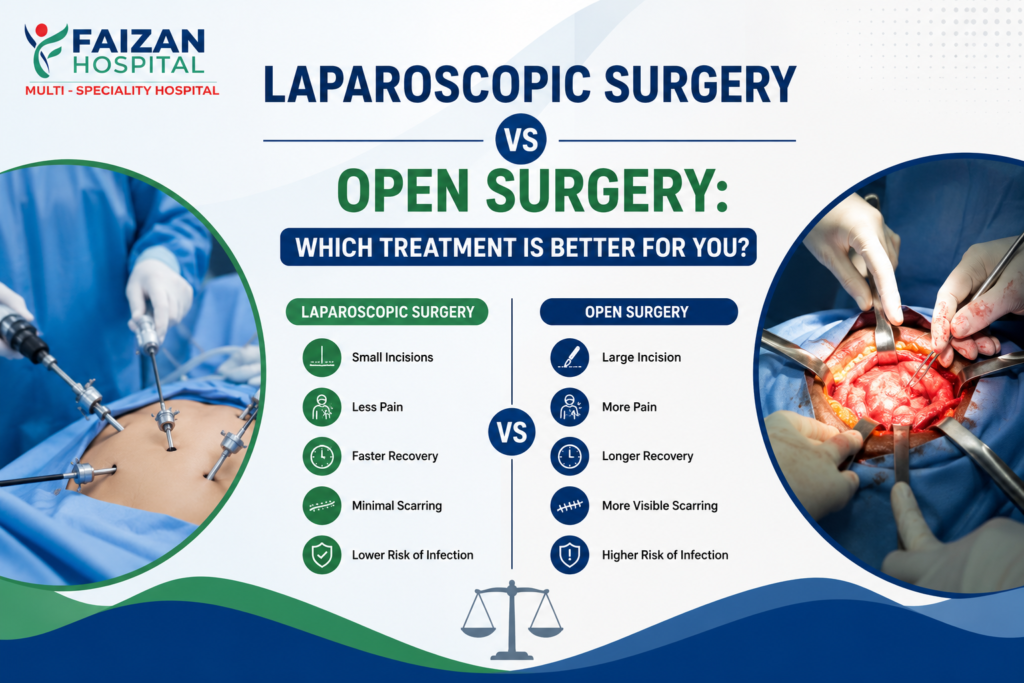
When surgery becomes necessary, one of the most common questions patients ask is whether they should choose laparoscopic surgery or traditional open surgery. Both techniques are effective and widely practiced, but the right option depends on the patient’s medical condition, overall health and the recommendation of an experienced surgeon.
At Faizan Hospital, we believe that every patient deserves a treatment plan that is safe, effective and tailored to their individual needs. With modern surgical technology and experienced specialists, the hospital offers advanced laparoscopic procedures for a wide range of conditions, helping patients recover faster while maintaining the highest standards of care. If you are looking for the Best Laparoscopy Hospital in Muzaffarnagar, understanding the differences between these two surgical approaches can help you make an informed decision.
Understanding Laparoscopic Surgery
Laparoscopic surgery, also known as minimally invasive or keyhole surgery, is performed using a few small incisions. A tiny camera called a laparoscope is inserted through one incision, allowing the surgeon to view the internal organs on a high definition monitor. Specialized instruments are inserted through the remaining incisions to complete the procedure with remarkable precision.
Because the incisions are small, patients usually experience less pain, minimal blood loss, reduced scarring and a quicker recovery.
What Is Open Surgery?
Open surgery is the traditional surgical technique in which the surgeon makes a larger incision to directly access the affected organ or tissue. This method provides a wider surgical field and is still considered the best option for certain complex medical conditions or emergency situations.
Although open surgery remains highly effective, it generally requires a longer recovery period and a longer hospital stay compared to laparoscopic surgery.
Laparoscopic Surgery vs Open Surgery
Incision Size
The biggest difference between the two procedures is the size of the incision.
Laparoscopic surgery requires only a few small cuts, while open surgery involves a larger incision. Smaller incisions result in less tissue damage and faster healing.
Pain After Surgery
Patients who undergo laparoscopic surgery usually experience significantly less post operative pain. Since muscles and surrounding tissues are disturbed less, the recovery process is often much more comfortable.
Open surgery may involve greater discomfort because of the larger incision and increased tissue exposure.
Recovery Time
Recovery is one of the most important factors for patients.
Laparoscopic surgery allows most patients to resume their daily activities much sooner than traditional surgery. In contrast, open surgery often requires several weeks of recovery depending on the procedure.
Hospital Stay
Patients undergoing laparoscopic procedures usually spend less time in the hospital. Some surgeries even allow same day discharge.
Open surgery generally requires a longer hospital stay for observation and recovery.
Blood Loss
Minimally invasive surgery typically results in less blood loss because surgeons work with greater precision using advanced instruments and high definition imaging.
Open surgery may involve comparatively higher blood loss depending on the complexity of the operation.
Risk of Infection
Smaller incisions reduce the risk of wound infection. Proper surgical protocols further improve patient safety during laparoscopic procedures.
Because open surgery involves a larger incision, the risk of wound related complications may be slightly higher.
Cosmetic Results
Laparoscopic surgery leaves very small scars that usually become less visible over time.
Patients who undergo open surgery often have a larger permanent scar due to the size of the incision.
When Is Laparoscopic Surgery Recommended?
Laparoscopic surgery is commonly recommended for treating various abdominal and pelvic conditions, including:
- Gallbladder stones
- Hernia
- Appendicitis
- Acid reflux
- Diagnostic abdominal procedures
- Certain gynaecological conditions, including ovarian cysts, endometriosis and selected fibroid related procedures
The decision always depends on the patient’s overall health and medical evaluation.
When Is Open Surgery Necessary?
Despite the many advantages of laparoscopic surgery, open surgery remains the preferred option in certain situations, such as:
- Severe abdominal trauma
- Large or complicated tumors
- Extensive internal bleeding
- Complex surgical emergencies
- Cases where laparoscopic surgery is not medically appropriate
An experienced surgeon will recommend the safest and most effective approach after evaluating the patient’s condition.
Why Experience Matters
The success of any surgery depends not only on the procedure itself but also on the expertise of the surgical team.
At Faizan Hospital, patients receive comprehensive care from diagnosis to recovery. The hospital combines experienced specialists, advanced surgical equipment, modern operation theatres and patient focused treatment protocols to deliver quality healthcare.
Patients searching for the Best Laparoscopy Hospital in Muzaffarnagar should choose a hospital that prioritizes surgical precision, patient safety and personalized care throughout every stage of treatment.
Recovery After Surgery
Regardless of the surgical method, following post operative instructions is essential for successful healing.
Patients are generally advised to:
- Follow all medication instructions.
- Eat a balanced and nutritious diet.
- Stay hydrated.
- Walk regularly as recommended.
- Avoid lifting heavy objects during recovery.
- Attend scheduled follow up appointments.
Recovery time varies depending on the patient’s condition and the type of surgery performed.
Which Treatment Is Better?
There is no single answer that applies to every patient.
For many abdominal and pelvic conditions, laparoscopic surgery offers clear advantages, including faster recovery, less pain, reduced scarring and shorter hospitalization. However, open surgery continues to be the safest option for certain complex medical situations.
The best treatment is always the one recommended by an experienced surgeon after a detailed medical examination and proper diagnosis.
Conclusion
Both laparoscopic surgery and open surgery have important roles in modern healthcare. While minimally invasive surgery has transformed patient recovery and comfort, open surgery remains essential for treating specific medical conditions.
At Faizan Hospital, every patient receives individualized treatment based on clinical evaluation and the latest surgical standards. If you are searching for the Best Laparoscopy Hospital in Muzaffarnagar, choosing an experienced healthcare provider with advanced technology can make a significant difference in treatment outcomes and recovery.
Service URL: https://faizanhospital.co.in/gynaecology/
FAQ
1. Is laparoscopic surgery safer than open surgery?
For many routine abdominal and pelvic procedures, laparoscopic surgery offers benefits such as less pain, smaller incisions, reduced blood loss and faster recovery. However, the safest option depends on the patient’s condition.
2. Can gynaecological conditions be treated with laparoscopic surgery?
Yes. Many conditions such as ovarian cysts, endometriosis, fibroids and certain fertility related problems can be treated using laparoscopic techniques when clinically appropriate.
3. How long does recovery take after laparoscopic surgery?
Most patients recover much faster than after open surgery, although recovery time varies depending on the procedure and individual health.
4. When is open surgery recommended instead of laparoscopic surgery?
Open surgery is generally recommended for complex cases, major trauma, extensive disease or situations where minimally invasive surgery is not suitable.
5. Why choose Faizan Hospital for laparoscopic treatment?
Faizan Hospital offers advanced laparoscopic technology, experienced specialists, personalized patient care and comprehensive treatment for a wide range of abdominal and gynaecological conditions.